Friday, May 28, 2010

Secrets From the Earth

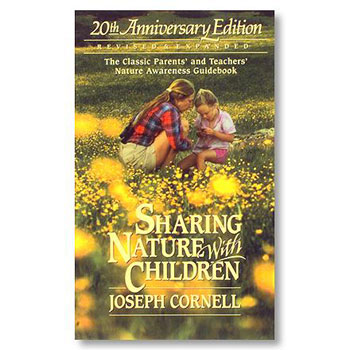
Teaching children stressed by caustic media and standardized testing, I find that a ball of earthen clay in their hands has very soothing effects - they actually become peaceful and harmonious while working with their clay, and often ask to take some home. Anything to do with nature makes kids happier. Not surprisingly, science backs this up - read this article from Time Colonist, May 25, Victoria, BC (the books pictured here were not mentioned in the article):

Parents, here’s another reason for your kids to play outdoors in the dirt: It may make them smarter. And, as a side benefit, dirt appears to be a natural anti-anxiety drug, but without the sideeffects. Mice exposed to a bacterium found in soil navigated a maze twice as fast, and with less anxiety, as control mice, in studies presented yesterday at the 110th general meeting of the American Society for Microbiology in San Diego.

The researchers say we’ve become so urbanized we risk losing a connection with an organism in nature that may actually be beneficial to humans.

Dr. Dorothy Matthews became intrigued by mycobacterium vaccae — a natural soil microbe — in 2007, when British scientists published a study showing that when mice were injected with a heatkilled version of the organism, it stimulated neurons in the brainstem to start producing serotonin.

“Serotonin is a molecule that has a number of different effects, but one of them is modulating mood and decreasing anxiety,” says Matthews, an associate professor of biology at The Sage Colleges in Troy, N.Y.
Serotonin also plays a role in learning. “If you’re nervous, if you’re frightened, you just can’t think straight,” Matthews said. She wondered, could M. vaccae have an effect on learning in mice? She and her colleague, Dr. Susan Jenks, also a professor of biology, dabbed the bacteria onto tiny peanut butter sandwich squares made with Wonder bread.

In one experiment, they tested how long the mice took to navigate a maze, which illustrates how quickly the rodents were learning whether they needed to turn right or left. The bacteria-exposed mice consistently ran the maze twice as fast as the non-exposed mice. They also showed fewer anxiety behaviours — less freezing, wallclimbing, stopping and grooming, returning to the start, or defecation.In other words, they were not scared poop-less.

Next, the researchers removed the bacteria from the peanut butter treats. About one week out, the experimental mice started running the mazes slower than they did when they were ingesting the bacteria. “They experienced a kind of serotonin withdrawal,” Matthews said. They were still faster than the controls, on average, an effect that lasted for another month of testing.

 After a three-week rest, the bacteria-exposed mice still ran the maze faster than the control mice, but the difference was no longer statistically significant.

Matthews says people are exposed to M. vaccae just by virtue of being outdoors. “If you think about it, when we look at our evolutionary history, we spent a lot of time as hunter-gatherers, or even more recently in agriculture, where we had lots of contact with the soil. It’s only been the last 100 years or so that we’ve become more urbanized.” We no longer eat foods that we grow or gather ourselves, she says — foods that haven’t been “washed multiple times, and dunked in hot water, or processed or grown with pesticides.”

Matthews doesn’t know how well the bacterium aerosolizes, “but certainly if you’re vigorously working in the soil, there are probably some particles that are becoming airborne, so we may very well be inhaling it, as well as eating it by inhaling it and having it get into our GI [gastrointestinal] tract.”

We’re also exposed via contact with food, especially foods grown directly in the soil, such as carrots and lettuce “and other things that are close to the soil.”

Making time in school curriculums for children to learn outdoors may decrease their anxiety and improve their ability to learn new tasks, she says. “There’s a movement now in some schools to actually have gardens that are part of the school experience.”

There are many wonderful books about gardening and sharing nature with children. The books shown here are available in most libraries, or they may be purchased in the activities section of the Acorn and Rose Bookshop: http://astore.amazon.com/httpwwwacorna-20?_encoding=UTF8&node=10

Wednesday, May 26, 2010

ADHD and Pesticides

Studies linking environmental substances to disease are coming fast and furious. Chemicals in plastics and common household goods have been associated with serious developmental problems, while a long inventory of other hazards are contributing to rising rates of modern ills: heart disease, obesity, diabetes, autism.
Add attention-deficit/hyperactivity disorder (ADHD) to the list. A new study in the journal Pediatrics associates exposure to pesticides with cases of ADHD in the U.S. and Canada. In the U.S. alone, an estimated 4.5 million children ages 5 to 17 have been diagnosed with ADHD, according to the Centers for Disease Control and Prevention, and rates of diagnosis have risen 3% a year between 1997 and 2006. Increasingly, research suggests that chemical influences, perhaps in combination with other environmental factors — like video games, hyperkinetically edited TV shows and flashing images in educational DVDs aimed at infants — may be contributing to the increase in attention problems.

Read the whole article: http://www.time.com/time/health/article/0,8599,1989564,00.html

Saturday, May 22, 2010

Snippets from Schools

Over the last months I've been fortunate - privileged and honored, actually - to work in a number of schools and libraries - and fell in love with a lot of young beings. Their eagerness and excitement to learn something special is very poignant to see and be a part of. The pictures in this slide show give you the idea (if you click on the lower left you can hear music):

Many teachers and parents celebrated the precious moments of handson learning in their classrooms . . . there is much to say about all of that . . . coming soon. 

Thursday, May 13, 2010

Where Do Chickens Come From?

The worst and best things all happened yesterday it seemed (not really), but my wonderful adorable sweet precious chicken Mama, Miss Chicken, got all torn up by a "bad and horrible" raccoon, and so did one of her little babies. Aurgh! Miss Chicken was so much fun to be around, the way her tiny children would poke their curious heads out from under her wings, the way she pecked up the best morsels of food and gave them to her beloveds, and the way she protected them from every possible danger. Can you believe I let my dog sleep at the foot of the bed, all comfortable and lazy, while my own dear hen was being murdered right in front of her family? I felt such sorrow all day. In the evening I thought the four little babies still running around the yard would go to bed in their mother's nest. Instead they flew up and roosted in the akebia vine, and ate some of the little purple flowers while they were getting settled in. Like they were big chickens now and had to take care of themselves. However, when it got dark I snatched them all up, gently of course, and tucked them into a cage. Just for the time being until I catch the coon.

The wonderful stone lithograph is by the d'Aulaires, Don't Count Your Chicks, available here: http://astore.amazon.com/httpwwwacorna-20?node=19&page=2 Any books by Ingri and Edgar Parin d'Aulaire are treasures - classics by the first husband and wife team to bring ancient myths and other magic to life for children.